
From Ice to Insight: Measuring Elite Curling Performance
The Challenge: Quantifying Sweeping Performance in Elite Curling
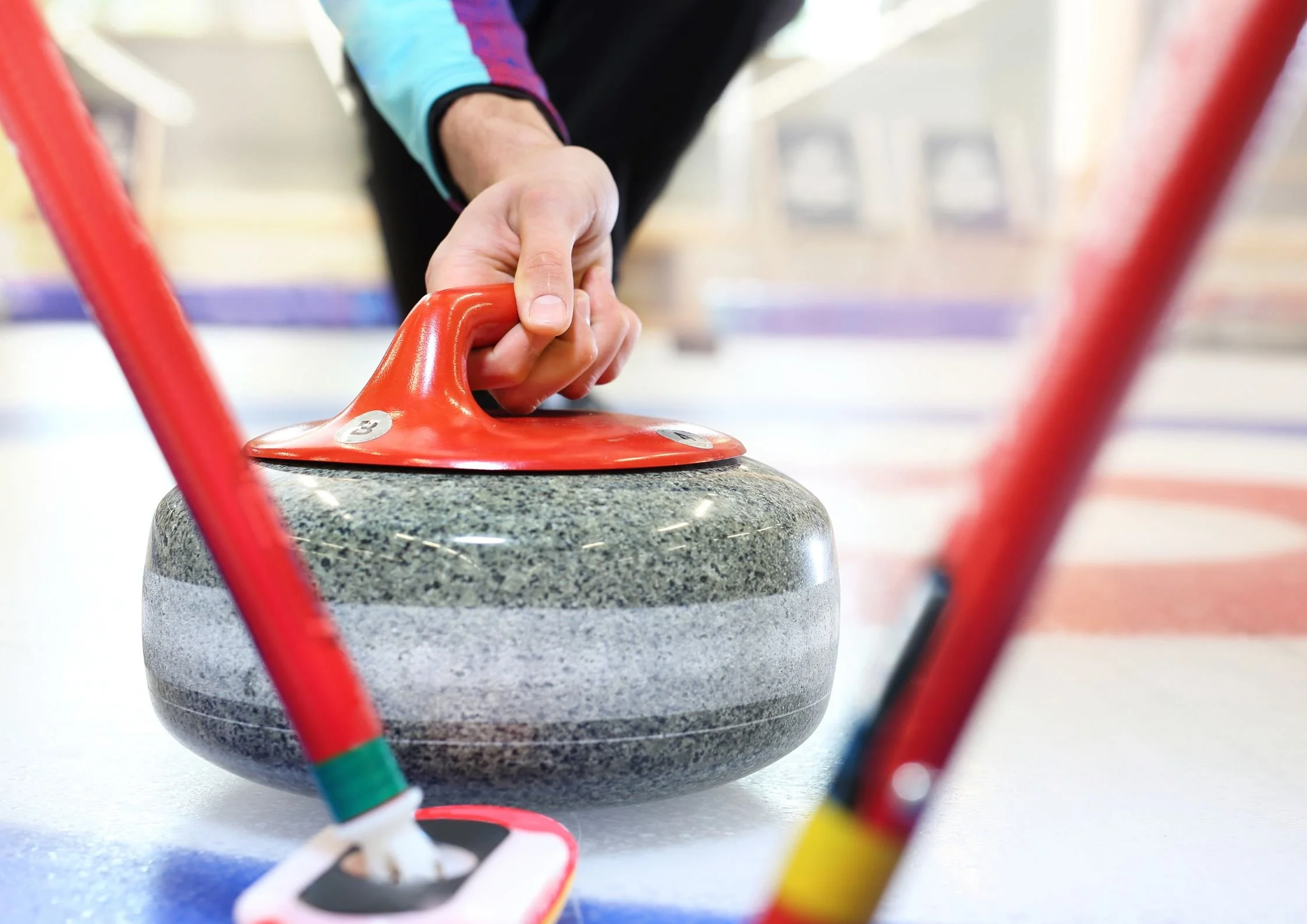
Curling is a sport that continues to grow in popularity. While it is widely recognised through the Winter Olympics, it has long had its own dedicated World Championships, with national and international competitions established well before curling became an Olympic sport. As the sport continues to reach new audiences and attract more players than ever, it is only natural that the athletic level and sporting performance of players continue to rise.
Against this backdrop, it came as little surprise when World Curling announced in late 2025 that, from Season 2026–2027, “the World Men’s and World Women’s Curling Championships will expand from 13 to 18 teams.”
At the elite level, success and failure in curling can come down to millimetres. Sweeping technique, force consistency, fatigue resistance, and efficiency over time all play a decisive role in match outcomes. Research published in the Journal of Sports Science & Medicine shows that effective sweeping is highly physically demanding and depends on a combination of downward force and brush speed, with fatigue contributing to measurable declines in performance.
Despite this, for many years coaches lacked reliable tools to objectively measure these factors and translate physically demanding sweeping skills into quantifiable performance data.
The Collaboration: Professor Gerry Sande and PPS
When Professor Gerry Sande, an experienced curling coach, needed a way to turn physically demanding sports skills into quantifiable performance data, he turned to tactile sensor specialist PPS. Together, they developed a smart training brush embedded with pressure sensors.
Sande Curling was founded by Professor Gerry Sande, a nationally certified curling coach and academic who holds multiple curling-related patents and has coached and worked with teams competing at Olympic and World Championship level. In the early 2010s, Prof Sande began exploring how to objectively measure sweeping efficiency and how this data could be used to improve technique.
He sought deeper insight into factors such as downward force, sweeping cycles per second, efficiency over time, fatigue-related power loss, and technique consistency. At the time, the technology required to reliably capture this information did not yet exist.
Believing pressure sensing could provide the answer, Prof Sande researched available technologies and discovered PPS. He recognised that the company’s high-resolution, repeatable pressure sensor arrays, supported by synchronised video and data capture, offered the precision required to meet his performance analysis goals.
Working together from 1월 2013, the collaboration resulted in a system capable of providing detailed analysis of sweeping performance, including how and where athletes apply pressure, and how efficiency changes with fatigue.
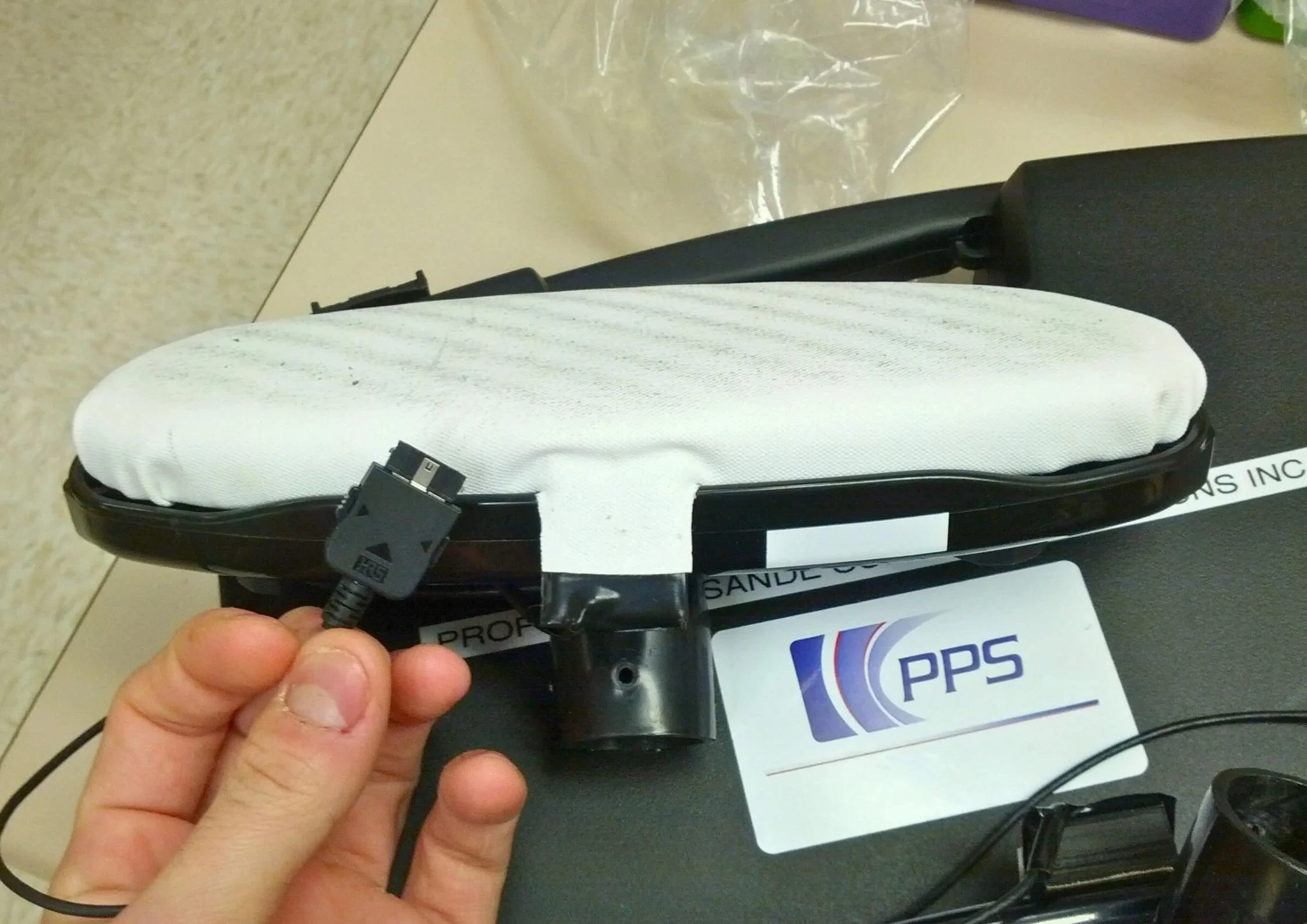
Purpose-built curling brush with embedded PPS DigiTacts pressure sensor for sweeping analysis.
Innovation: A Purpose-Built Curling Brush with PPS DigiTacts™ Sensors
The curling training brush is underpinned by PPS’ DigiTacts thin-film pressure sensor arrays. PPS integrated the sensors directly into the brush and provided Bluetooth transmission hardware, data capture and visualisation software, along with remote training and technical support to enable meaningful use of the data.
DigiTacts is a compact, high-sensitivity tactile sensor designed to measure applied pressure and contact forces with exceptional resolution. This makes it well suited to capturing the subtle but significant variations generated during curling sweeping.
To integrate the technology into the brush, a slot was cut into the brush head so the sensor tail and cable could be routed internally. The sensor tail was fixed at a 90-degree angle to the plate edge, allowing the electronics to sit securely inside the brush head. This ensured the sensor remained stable for accurate measurement while also protecting it from impact, moisture, snow, and debris during on-ice testing.
The system synchronised pressure data with video footage, enabling detailed performance analysis, and, according to Prof Sande, remains fully operational more than a decade later.
The Experimental Setup: Capturing Force, Frequency, and Fatigue
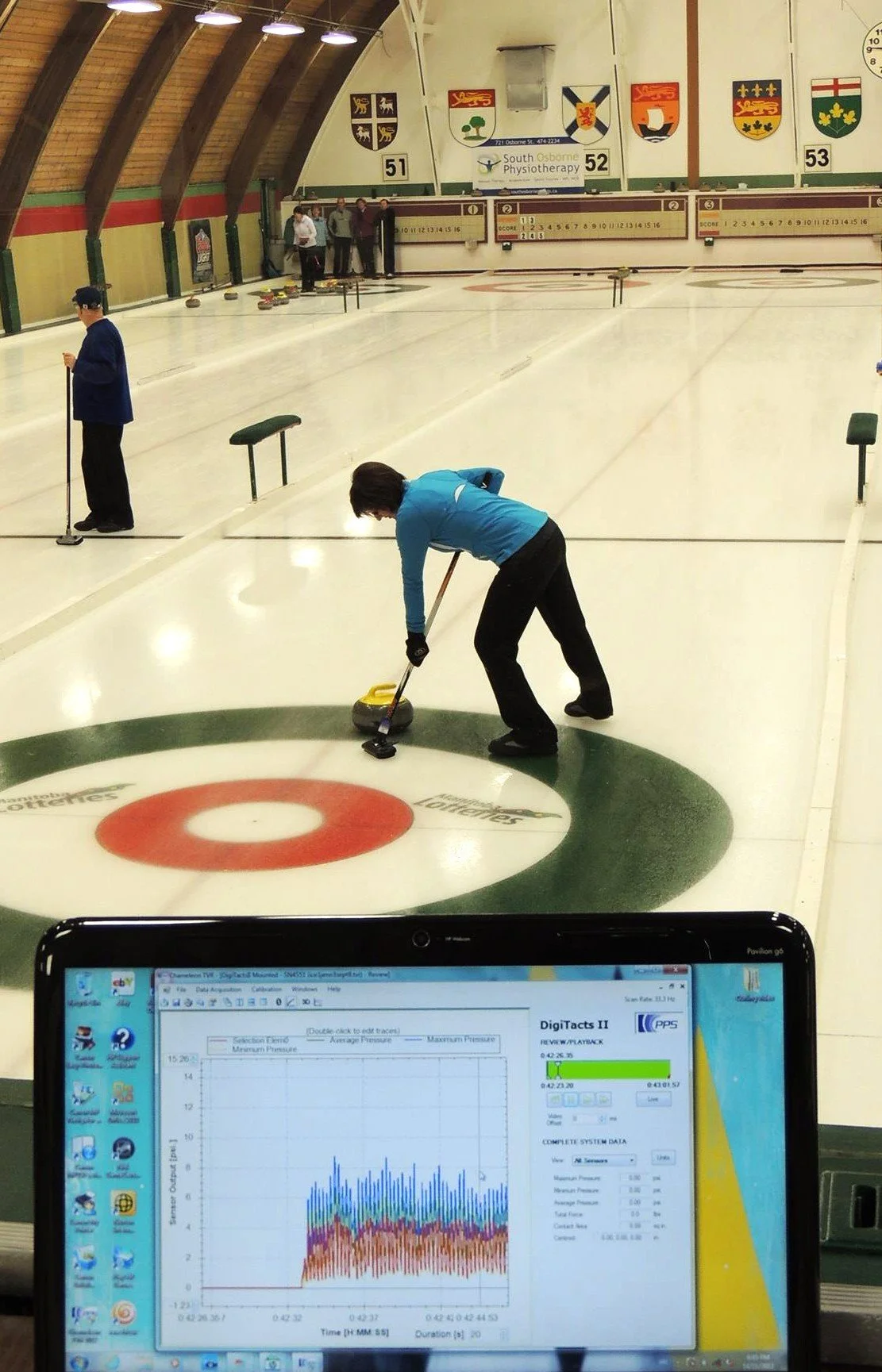
During use, DigiTacts measures force through an array of pressure sensors while also capturing sweeping frequency. Data is streamed wirelessly to a laptop, where live video footage and force traces are synchronised directly on screen.
This setup makes it possible to identify where performance declines are fatigue-driven, supporting long-term analysis of an athlete’s stamina and efficiency. It also allows coaches to compare sweepers within a team, informing role placement and targeted training focus.
As observed during coaching sessions conducted by Prof Sande, the training brush revealed performance characteristics that would otherwise have gone unnoticed. In one case, data from a Swedish player showed a loss of pressure on every fifth stroke.
This insight allowed coaches to adjust the player’s footwork and improve technique, helping increase measured efficiency by as much as 50 percent. The data also provided a clear indicator of stamina, helping teams understand how sweeping performance declined during sustained effort and how targeted conditioning could reduce that drop-off.
The Results: Detailed Performance Insight Beyond Conventional Tools
“There are two electrodes for each array of sensors and as you exert pressure the distance between these two electrodes changes – that tells you how much pressure is applied,” explained Prof Sande. “The PPS system is very sophisticated and gives you a very detailed analysis. In comparison, other systems commonly used in curling training are far more limited and do not deliver the same quantity or quality of performance data.”
The ability to objectively quantify sweeping force, consistency, and fatigue provided coaches with actionable insights that could not be obtained through observation alone.
Real-World Impact: From Training Data to Competitive Success
Prof Sande has put the training brush developed with PPS to use for more than a decade. It has been applied in a wide range of contexts, from elite performance testing to national team environments.
Under Prof Sande’s supervision, the PPS brush has been used to assess and refine technique in teams and athletes who have gone on to win national championships and Olympic medals, with those performance gains ultimately applied in elite-level competition using standard equipment.
He found that the ability to correct sweeping technique, improve force consistency, quantify fatigue effects, and understand individual strengths and weaknesses provided a significant performance advantage. In fact, the system has been used by teams who went on to win Olympic gold medals and World Championship titles.
“Success and failure in elite-level curling often comes down to a matter of millimetres, so what might seem like small improvements in player performance can make a huge difference on results on the ice. The margins that can be gained using the training brush developed with PPS really is a game changer,” Prof Sande concluded.
Conclusion: Applying Tactile Data to Elite Sports Performance
“We saw our work with Prof Sande on the curling training brush project as a chance to use tactile data to understand contact mechanics and make a genuine impact, helping to raise performance levels as the sport continues to grow,” reflected Dr Jae Son, founder and CEO of PPS.
This collaboration demonstrates how high-resolution tactile sensing can translate physical skill into objective performance data, enabling measurable improvements at the highest levels of sport.
To find out more about how PPS’s pressure sensor technology is used across various applications, check out its case studies on its website.